A Single Handle Brass Bath Mixer reaches the customer as a polished body with one lever, but its quality is set earlier, in the casting, machining, and testing steps behind it. Zhejiang Zhendi Sanitary Ware Co., Ltd. in Sanmen, Taizhou, has made faucets and mixers since 1993, and it runs two casting foundries and a CNC machining factory, with its own laboratory and testing equipment alongside. For importers and project buyers, that chain of steps is where a bath mixer's behavior over the years is decided.
Casting Sets the Body
A brass body begins as molten metal poured into a mold. Across the industry, castings that are poured without close control can hold tiny pores, and a pore that reaches a water passage can become a slow seep after installation. Alloy choice matters as well, because drinking-water rules in different regions put limits on brass and, in some markets, call for dezincification-resistant brass.
A maker with its own foundries is positioned to manage both points at the source: the alloy that goes into the furnace, and the pouring and cooling of each casting. Zhendi's two foundries give a Single Handle Brass Bath Mixer that route, so the body is followed from the metal onward.
Machining Makes the Seat and the Thread
A cast body is a rough shape until it is machined. The cartridge seat, the threads, and the sealing faces are cut on CNC machines, and their accuracy decides whether the cartridge sits true and the joints stay dry. The numbers that these cuts serve are a 35 mm cartridge and a G1/2" interface.
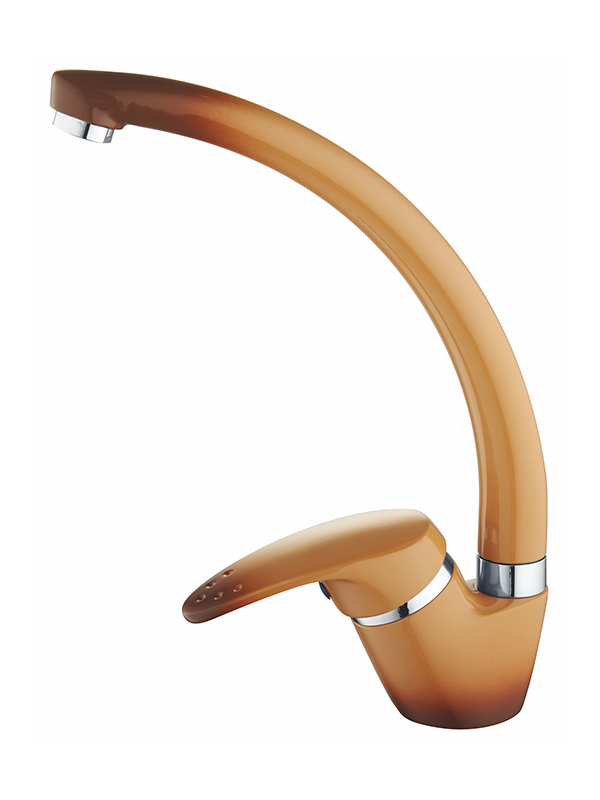
A Single Handle Brass Bath Mixer has few moving parts, so each machined surface carries weight. A seat cut to a steady dimension lets the cartridge be fitted without forcing, and a clean thread lets the supply connection tighten evenly. With casting and machining under one company, the two steps can be tuned together.
The Cartridge Sets the Daily Feel
The lever is what the user touches daily, and the ceramic cartridge behind it decides how a Single Handle Brass Bath Mixer feels. In a single-lever mixer, one movement sets both flow and temperature: lifting the lever opens the water, turning it shifts from cold to hot. Ceramic discs slide against each other with a smooth, even resistance and keep their seal through many cycles, which is why this cartridge type is widely used in bathrooms, hotels, and renovation projects.
Zhendi offers eight models under the Single Handle Brass Bath Mixer name. Four of them, ZD517-09, ZD933-01, ZD943-01 and ZD942-01, carry a 35 mm cartridge with a G1/2" interface and a rated flow of 12 L/min, and they support both bath filling and a hand shower. The other four, ZD204-01, ZD916-01, ZD910-01 and ZD901-01, are 35 mm ceramic single-lever bath mixers. Both groups share the same cartridge size, which simplifies spare parts across the range.
Finish and Testing
A bath mixer lives in a damp room, so its surface has to withstand steam, soap, and cleaning products. Zhendi's bath mixers come in chrome and nickel finishes. Chrome gives a bright, easy-to-wipe surface, and nickel gives a softer metallic tone, so a project can pick the look that matches its fittings.
The usual checks in the trade for a Single Handle Brass Bath Mixer include a pressure test for leaks, a cycle test of the cartridge, and a salt spray test of the finish. Zhendi has its own laboratory and testing equipment, which supports checks of this kind. Zhendi holds ISO 9001 and CE certifications, which give export customers a documented quality system and a conformity mark to refer to.
What Importers Compare
Importers who source a Single Handle Brass Bath Mixer tend to compare the same few points: the control of the brass and the casting, the accuracy of the machined interfaces, the cartridge type and size, the finish options, and the testing behind them. Each of those can be read from a supplier's own facilities and range.
Zhendi has worked as an OEM and ODM export manufacturer of bath faucets and bathtub mixers for over 20 years, with brass and stainless steel bodies in its range. A single-handle brass bath mixer can be followed from casting to the finished carton within one company, and the same foundries, machining, and laboratory serve the other mixers in its range, from basin and shower mixers to kitchen and bidet models.