A Bathroom Shower Arm Pipe looks like a simple bent tube, yet it connects a wall water supply to a shower head and has to do three jobs at once. It carries the water, it holds the weight of the head at a cantilevered distance from the wall, and it sets the angle the spray leaves at. Zhejiang Zhendi Sanitary Ware Co., Ltd., based in Sanmen, Taizhou, Zhejiang, has made shower pipes for over 20 years, and its Shower Pipe range includes the S131, S132, S133, S135 and S137 models.
A Tube Under Constant Leverage
A shower head hangs at the end of the arm, so the pipe is under bending load every time the shower runs and every time someone adjusts the head. The joint at the wall carries that leverage, and a heavier head or a longer arm increases it. Over months of use, a Bathroom Shower Arm Pipe that flexes at the wall joint loosens its thread, and a loose thread seeps.
Shower pipes are typically made from brass or stainless steel, and both resist the repeated stress and the constant wet of a bathroom. Brass threads and seals easily, and Zhendi, which also produces brass faucets and mixers, applies the same material knowledge to its shower pipes. A bend formed with even wall thickness keeps the water flowing and keeps the pipe strong where the load is highest, since a flattened bend does neither.
Four Points Along the Pipe
|
Point on the pipe |
Common issue |
Usual remedy |
|
Wall thread |
Loosens under leverage and weeps |
Accurate threads and a well-formed bend reduce side load on the joint |
|
Bend |
Flattens, restricting flow |
Formed with even wall thickness through the curve |
|
Surface |
Dulls, spots or peels from water and cleaners |
Chrome, brushed nickel, oil-rubbed bronze or matte black finishes applied to a polished base |
|
Cover plate |
Leaves a gap at the wall |
Flange that sits flat against tile |
These four points apply to every Bathroom Shower Arm Pipe, from the S131 to the S137.
Finish Has to Match the Room
A shower arm is a highly visible metal part in a bathroom, so its colour has to agree with the tap, the shower head and the towel rail beside it. Finishes in the shower pipe range include chrome, brushed nickel, oil-rubbed bronze and matte black. Chrome gives a bright, easy-to-wipe surface, brushed nickel hides water marks well, oil-rubbed bronze suits traditional rooms, and matte black fits contemporary ones.
A finish on a Bathroom Shower Arm Pipe also protects the metal. Shower arms sit in steam and are wiped with cleaning products, and a plated or coated surface keeps its colour longer.
Shape and Reach for Different Showers
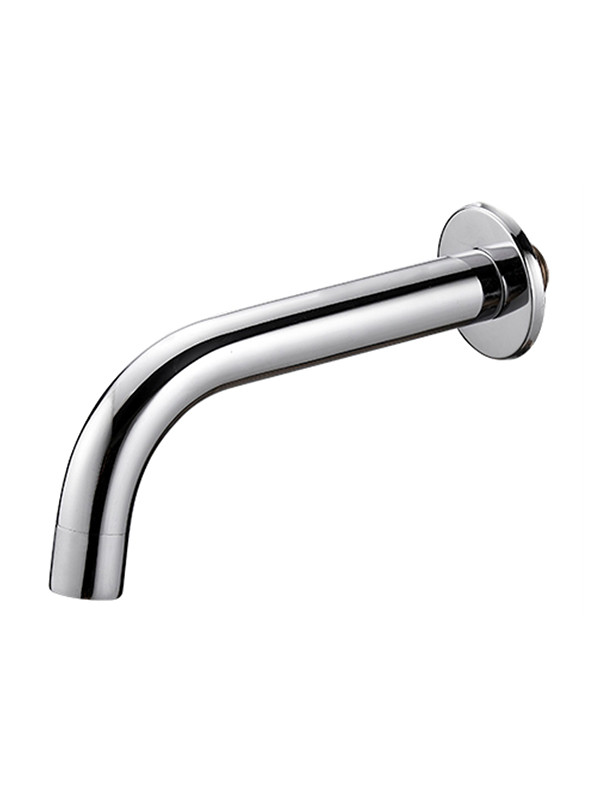
Showers vary widely. A small bath with a hand-held head needs a short, compact arm, while a rain shower head needs a longer, straighter or ceiling-oriented arm so the spray falls from above. The five models, S131 to S137, give a range of Bathroom Shower Arm Pipe shapes so a fitter can choose the one that suits the head and the wall position. Where a project needs a shape of its own, Zhendi takes on OEM and ODM work, in which the arm is developed together with the customer.
Fit With the Rest of the Shower
An arm pipe does not work alone. It has to take the thread of the wall elbow on one end and the thread of the shower head on the other, and the two ends may follow different standards in different markets. A Bathroom Shower Arm Pipe made for export therefore needs correct end threads, a cover plate sized for the wall elbow and a finish that matches the head. Zhendi supplies export orders and OEM/ODM projects, where end threads and cover plate size are agreed with the customer for each destination.
What Installers Notice
Installers judge a shower arm by how it goes on: the thread engages smoothly, the pipe sits at the intended angle when tightened, the plate closes against the wall and the finish arrives unmarked. Each detail saves time on site, and a Bathroom Shower Arm Pipe that meets all four stays trouble-free once the tiles are grouted and the shower is in daily use.