An Industrial Basin Taps design is often recognized by its simple lines, visible structure, and practical appearance. However, creating this style requires more than changing the outside shape. Behind every finished tap is a production process involving material preparation, machining, surface treatment, and repeated inspection. For manufacturers, achieving a consistent finish across thousands of pieces is one of the important steps before the product reaches the market.
In sanitary ware production, appearance and function are closely connected. A surface finish not only influences visual quality but also reflects whether earlier manufacturing processes remain stable.
The Surface Starts Before Polishing
Many people associate the final appearance of a faucet with the last polishing stage.
Factory workers look further back.
The condition of the raw body.
The accuracy of machining.
The preparation before coating.
Each step influences the final result.
For industrial basin taps, small surface differences can become easier to notice because industrial-style designs often use clean shapes and clear edges. Any uneven area may affect the overall appearance after finishing.
Therefore, manufacturers usually inspect the surface before the final treatment begins rather than trying to correct problems afterward.
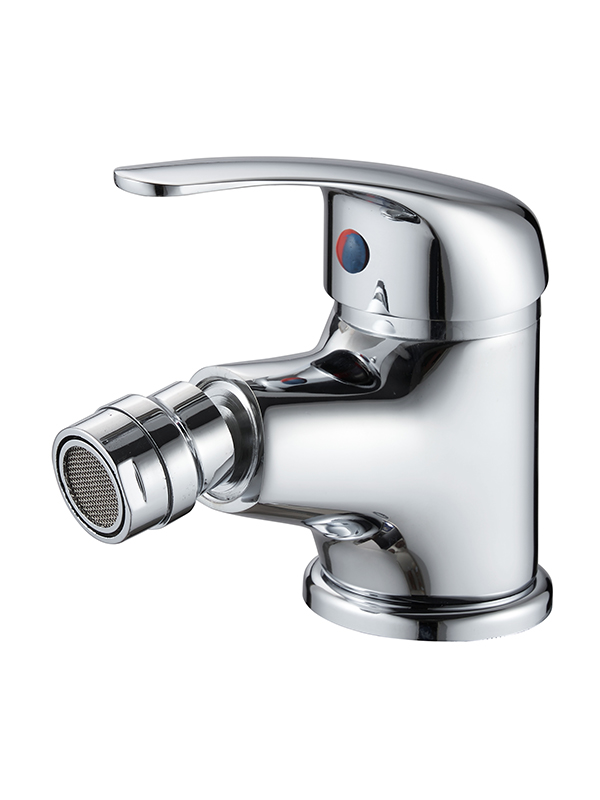
Machining Creates The Final Shape
A faucet body may appear simple, but many details need accurate processing.
Thread positions.
Connection areas.
Handle installation points.
Water passage sections.
During machining, workers check whether each part remains within production requirements.
A small dimensional difference may influence assembly later.
For this reason, quality inspection does not focus only on the finished appearance of industrial basin taps. It also considers whether every internal and external section has been prepared correctly before assembly.
Surface Treatment Requires Stable Conditions
Different finishes require different production conditions.
The surface needs to remain clean.
The treatment process needs stable control.
The finished layer needs to cover the product evenly.
During production, workers usually inspect samples from different batches instead of checking only one completed piece.
They compare color.
Surface smoothness.
Visible marks.
These checks help confirm that the appearance remains similar throughout production.
For customers ordering large quantities of industrial basin taps, batch consistency is often as important as the design itself.
Assembly Reveals Earlier Production Details
A faucet becomes a complete product only after multiple parts come together.
Handles are installed.
Internal components are fitted.
Connections are checked.
At this stage, assembly workers can often identify whether earlier processes were stable.
If parts fit smoothly, production continues normally.
If adjustments are repeatedly required, engineers review previous steps to find the source.
This is why assembly feedback becomes valuable information for improving future manufacturing.
Quality Records Support Long-Term Production
Factory records are usually simple.
surface sample checked
machining result confirmed
assembly inspection completed
final batch approved
These notes may look ordinary, but they allow production teams to compare different manufacturing periods.
When a repeat order arrives months later, previous records help maintain similar standards instead of starting from the beginning again.
Design And Manufacturing Work Together
The appeal of an industrial style comes from its straightforward appearance.
However, maintaining that appearance requires careful production control behind the scenes.
The shape must be accurate.
The surface must be prepared correctly.
The finished product must remain consistent between batches.
For manufacturers producing industrial basin taps, quality is created through many connected steps rather than one final inspection. Material preparation, machining control, surface treatment, and assembly checks all contribute to the final result, allowing the finished tap to maintain the same appearance and performance expectations across different projects and production orders.