Bathroom fixture development is increasingly shaped by installation compatibility as well as appearance. For distributors and product developers, the structure behind a faucet can influence whether a model fits different renovation projects and regional plumbing requirements. A Double Handle Bath Mixer illustrates this clearly because its two control handles, hot and cold inlets, bath outlet, and shower connection must work together within a defined wall-mounted layout.
Two Handles Create a Different Control Structure
Unlike single-handle fixtures, a Double Handle Bath Mixer uses separate controls for temperature and water flow. This arrangement gives users independent adjustment of the hot and cold water supply, while the overall body connects the water paths into the required outlet configuration.
For product development, the handle layout also affects the visual balance of the fixture. The spacing between controls, body proportions, and outlet position need to form a practical assembly rather than simply create a particular appearance. These details become especially relevant when the product is developed for different bathroom styles or private-label ranges.
Wall-Mounted Design Puts Connection Dimensions in Focus
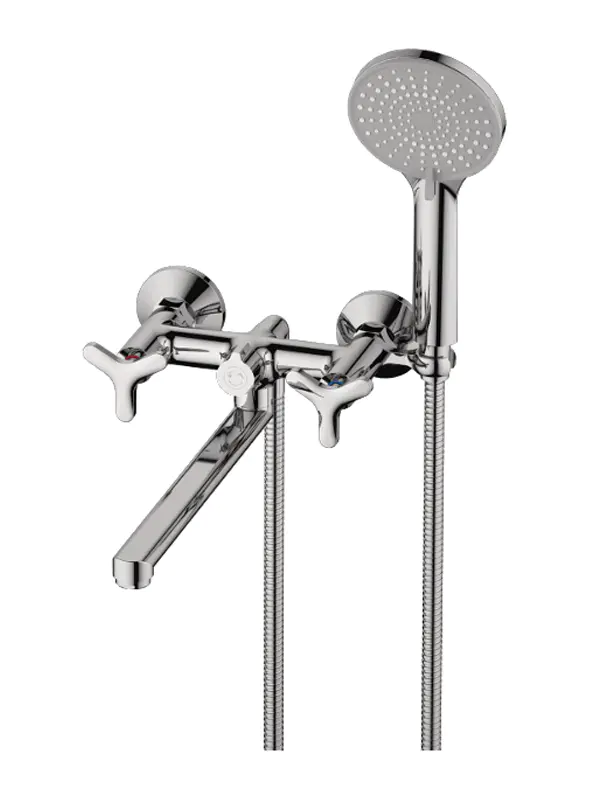
A wall-mounted fixture depends heavily on the relationship between its inlet positions and the existing plumbing. The ZD59-01 uses two G1/2 inlet connections for hot and cold water, with a center-to-center inlet distance of 150±15 mm. This adjustable range gives the installation structure some flexibility while retaining a standardized connection format.
For buyers comparing a Double Handle Bath Mixer, connection dimensions can be more useful than appearance alone. Inlet spacing, thread specification, outlet position, and installation method all influence whether a model is suitable for a particular project. These specifications are also important when distributors need to coordinate faucets with existing bathroom plumbing components.
One Body Supports Bath and Shower Functions
The product is designed as a wall-mounted bath mixer and shower set, combining bath water supply with a G1/2 shower outlet for a handheld shower connection. This creates a multi-function arrangement within one fixture rather than treating the bath outlet and shower connection as completely separate products.
From a manufacturing perspective, the additional outlet affects internal water routing and external body design. The position of each connection must leave sufficient space for installation while keeping the fixture visually coherent. This type of integrated structure is particularly relevant to bathroom ranges intended for renovation projects where space and plumbing positions need to be considered together.
Standard Threads Support Broader Product Development
The use of G1/2 connections is another practical consideration for international product development. The ZD59-01 specifies G1/2 inlet and shower outlet threads, providing a familiar connection format for bathroom plumbing applications.
A G1/2 bath mixer can therefore be evaluated not only as an individual faucet but also as part of a wider bathroom product range. Importers and distributors may compare thread specifications, inlet spacing, and compatible accessories when developing a consistent assortment. Standardized connections can also simplify coordination between the mixer, shower hose, and handheld shower components.
Handle Configuration Influences Product Positioning
The two-handle format remains useful for product ranges that emphasize conventional control layouts. Separate handles provide a recognizable operating method and create a visual structure that differs from contemporary single-control designs.
For retailers and private-label brands, this distinction can affect how a Double Handle Bath Mixer is positioned within a collection. A traditional handle arrangement may complement bathroom ranges where matching basin mixers, shower mixers, or other fixtures use similar control elements. Product development can consequently involve coordination across several related faucet categories rather than designing each model independently.
Customization Starts With the Functional Structure
OEM and ODM development of bathroom fixtures often begins with the required installation and functional layout before surface styling is finalized. For a Double Handle Bath Mixer, this can include inlet spacing, thread size, outlet arrangement, handle configuration, and compatibility with the intended shower components.
Once these structural requirements are defined, manufacturers can develop the external form around them. This approach gives customization a practical foundation: changes to appearance, handle styling, or product presentation can be considered while retaining the functional dimensions needed for the target market.
Connection Standards Remain Central to Mixer Development
The development of modern bathroom fixtures is not limited to creating new shapes. Installation dimensions and connection standards continue to influence how products are designed, manufactured, and grouped into complete bathroom collections. The ZD59-01 demonstrates how a two-handle control system, dual hot-and-cold inlets, bath outlet, and handheld shower connection can be integrated into one wall-mounted configuration.
For international buyers, these functional details provide a useful basis for comparing different bath mixer designs. As bathroom product ranges become more coordinated, connection layout and application suitability remain important parts of product development alongside appearance and market positioning.